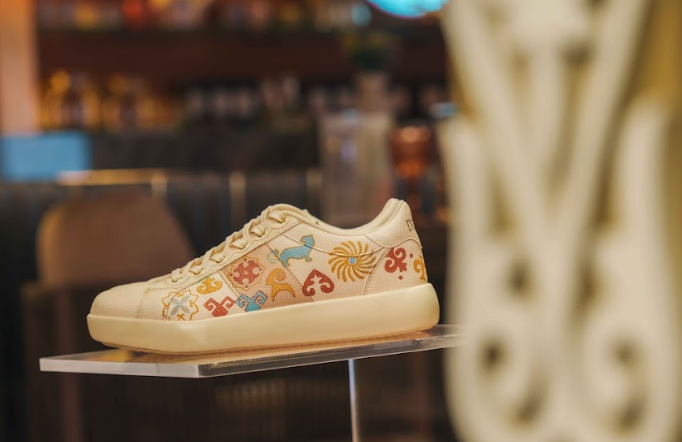
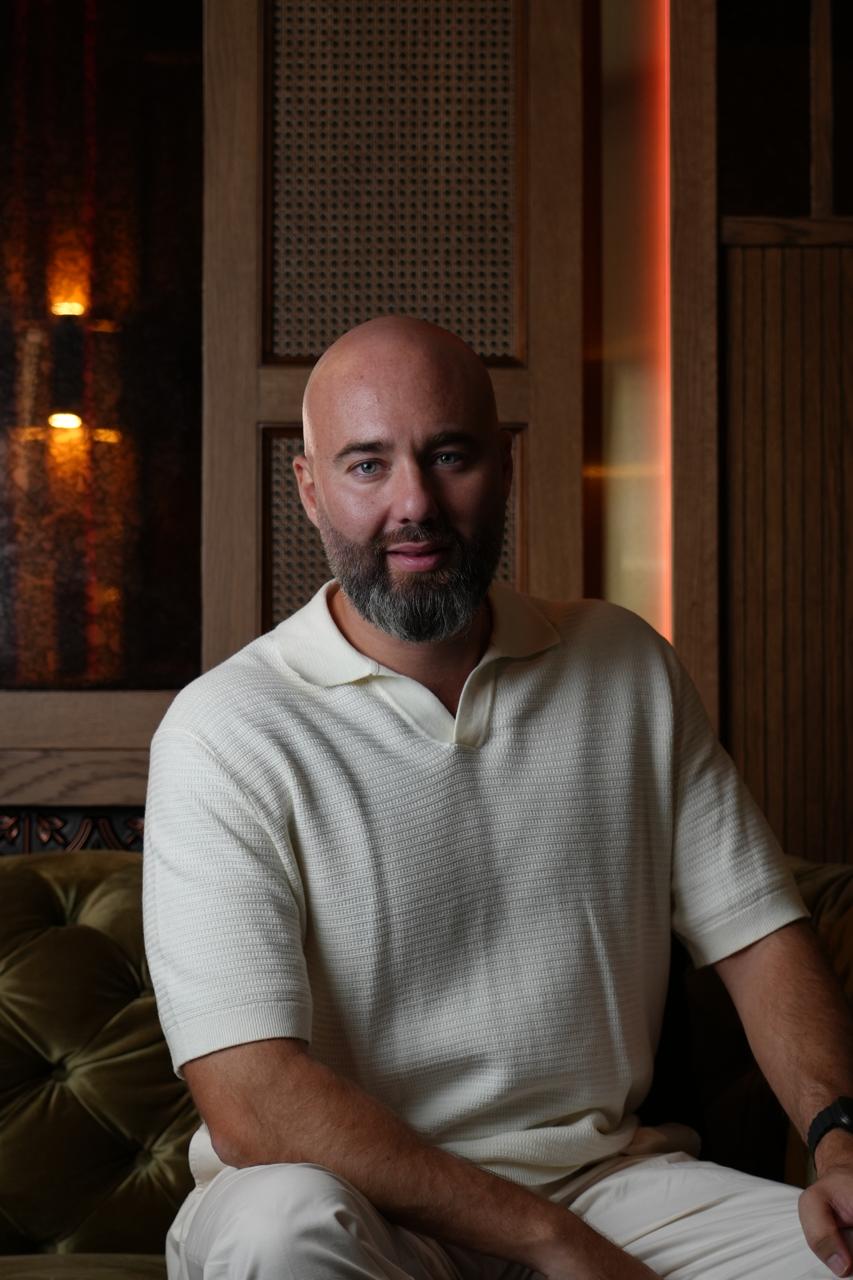
#INTERVIEW: Sharon Tal, Creative Director of Maskit Fashion House

When Sharon Tal graduated from the Israeli fashion school Shenkar, her school collections earned her an internship at Lanvin in Paris under Alber Elbaz. Tal completed two further internships at Lanvin before getting the internship position at Alexander McQueen in London, where she later became the head of embroideries. Her designs have been worn by numerous celebrities, and displayed within the “Savage Beauty” exhibition which opened at the Metropolitan Museum of Art in New York, and was also showen at the Victoria and Albert Museum in London. Following McQueen’s death in February 2010, Sharon Tal returned to Israel to give birth to her first daughter. After the birth, she worked as a journalist for fashion and lifestyle blogs and magazine “Stylus”. Sharon Tal is married to Nir Tal, the CEO of Maskit. Together they have three kids, and they all live in Tel Aviv.
Rut Schwartz (later Dayan after marrying the former political icon Moshe Dayan), was born in 1917 in Haifa. She opened Maskit fashion house in 1954 as a way to help the new immigrants arriving to Israel to find work using the unique craft skills that they brought from their own cultures. Starting initially as a government funded scheme, Maskit employed over 2000 immigrants from countries such as Marrocco, Bulgaria, Hungary and Yemen. This work empowered women and preserved the ethnic crafts and cultures from communities all over the world. Maskit became Israel’s only fashion house with stores in Israel and on New York’s 5th Avenue. It drew the attention of Pauline Trigeve and prestigious designers and fashion houses such as Christian Dior, Yves Saint-Laurent and Givenchy, and resulted in several collaborative efforts. Maskit was worn by many celebrities (Elizabeth Taylor and Audrey Hepburn), and was carried by Bergdorf Goodman and Neiman Marcus. The house was sold to private investors in 1978 and then closed for business in 1994.
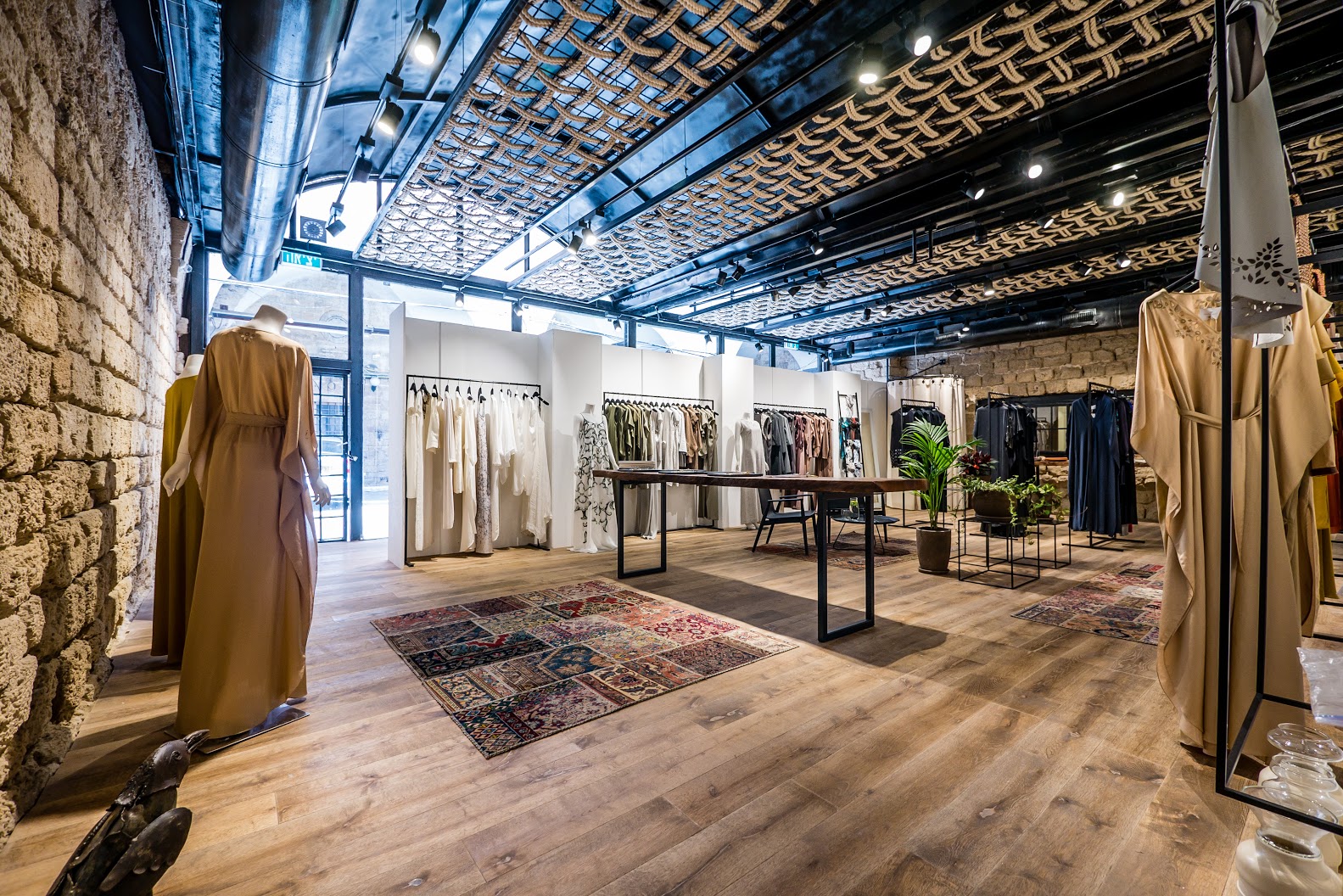
The wedding of Prince William to Catherine Middleton, who wore a dress designed by Sarah Burton, the current creative director at Alexander McQueen, had a life changing effect on Sharon Tal. She felt that she had missed out on being part of a momentous moment in fashion and her career, as she would have been part of the design team for the wedding dress. This inspired her to re-enter the world of fashion design. She embarked on a quest to understand the history and current situation within Israel’s fashion scene. She noticed that there are a great number of talented independent fashion designers in Israel but no fashion houses to employ them, until she came across Israel’s only fashion house, Maskit. She approached founder Rut Dayan, who was at the time 94 years old, and together agreed to re-launch Maskit, revitalizing the brand and continuing its legacy. Tal conducted two years of research to understand Maskit’s history, meeting many of the original artists that worked with the fashion house. She explored how the country’s landscape, geography, people and their cultures, Biblical panorama and heritage impacts the clothing production. The textiles, embroideries, craftsmanship and designs all narrate the story and history of Israel.
Tanja Beljanski: How did you decide to re-establish Maskit?
Sharon Tal: It all started when I was working for Alber Elbaz in Paris. I fell in love with working in a big fashion house, with the best materials, most professional people, and the most creative inspirations. Then I was working for Alexander McQueen in London as the embroidery designer and a whole world of craft was opening to me. Together with all these new passions and skills I learned, I came back to Israel and wanted to establish my own brand, but then I heard about Maskit, about the story of the new immigrants that came to a new country and brought their cultures with them, the embroideries, the jewelries, the rugs, and about Rut Dayan that took all of that and created the new face of Israel, that was so inspiring for me that I decided to revive the only fashion house that Israel ever had — Maskit.
TB: What was your impression when you met Ruth Dayan for the first time? What was your professional and personal experience with her?
ST: I fell in love with Rut on our first meeting that lasted eight hours! Rut was an extraordinary woman, entrepreneur, with the most amazing eye and taste and the biggest heart. All of that brought her to do unbelievable things and create an international fashion house when there was nothing here in Israel. Rut told me all about Maskit and together we traveled all over the country and outside of it, so she could show me what they did, and we met people that worked for Maskit, or were related to them. Rut helped me understand what it was, how it worked and how she did it. She motivated me, she was my muse. Personally, although she was 64 years older than me, she was my best friend, my partner. We called her the dinosaur, because she was so rare and precious.
TB: How do you think the values and culture of Israel are reflected through Maskit?
ST: Maskit is Israel. The collections are inspired by the landscapes, the cultures and the beautiful moments we have here, from the city life to the desert, from the beach to the mountains, from the foods and from the melting pot which Israel is.
TB: What are some of the traditional techniques in your designs that are noteworthy or uncommon in clothing today?
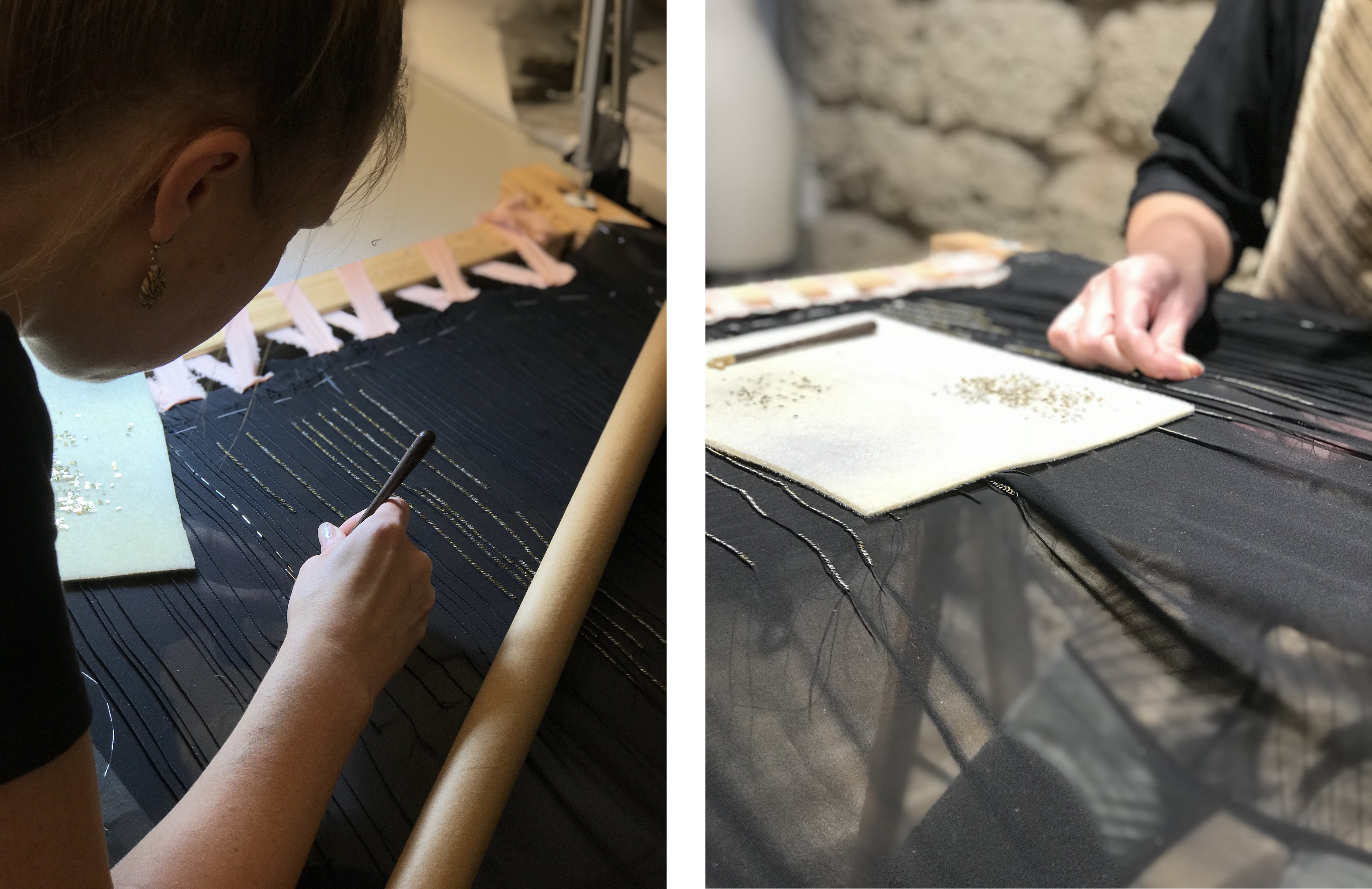
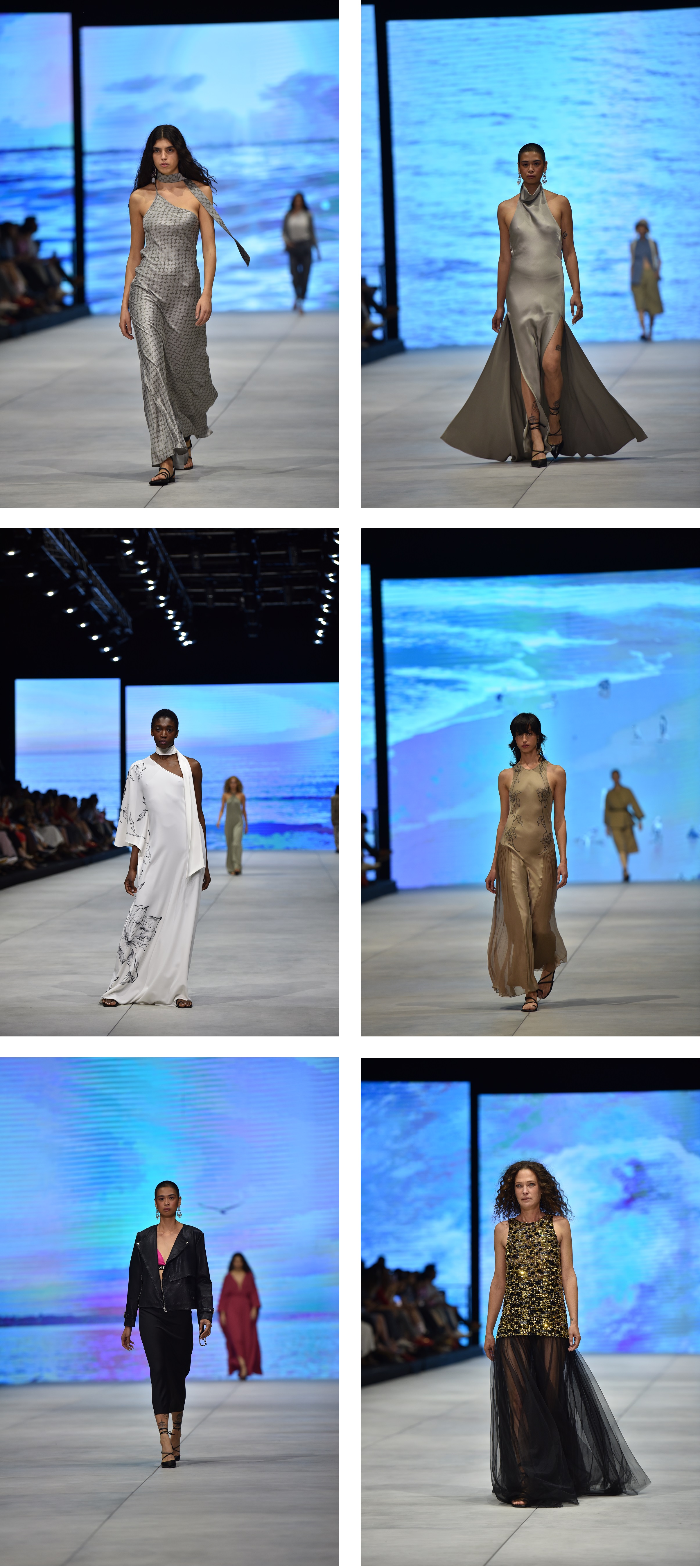
ST: The Maskit line is a luxury couture line, which means everything is hand-made so everything is unique and created especially for us. We have the most unique technique which is the prayer shawl embroidery. It is a very old technique made of silver flat ribbon that creates a 3D embroidery. We took that, and created new, modern shapes and designed the evening dresses that are decorated with this amazing silver embroidery. It looks like giant jewelry. We also have hand painted prints over silk organza dresses and many more.
TB: How do you design? What form do your earliest ideas for a collection take?
ST: When I design I usually escape for three days of silence, so I can be with myself and concentrate only on designing. I always take with me the inspiration board which I prepare before I travel, with all the images, colors, textures I like, and which are inspiring me for that collection. Then I start building the collection from the basic sketches to the smallest details on each item.
TB: Does art spark your creativity?
ST: Of course! At the end of the day, the Maskit collection is art; every print is hand painted, every bead and sequin is stitched with our design instructions. We create art. We even had a campaign that was shot in the desert with a dancing band. That became a photography exhibition called “Sodom” that was shown in NYC. We always look and take inspiration from art.
____________________________________________________________________
“The Maskit collection is art.
Every print is hand painted, every bead
and sequin is stitched with our design instructions.”
____________________________________________________________________
TB: How do you discover new textiles?
ST: I travel to trade shows around the world. I have suppliers which are sending me samples and also I develop them myself.
TB: What is your design ethos?
ST: Slow fashion — buy less, use it more. Day to night — don’t use the item once, mix and match it and use it again.
TB: Can you tell us a little about how the brand has evolved and is appealing to today’s woman?
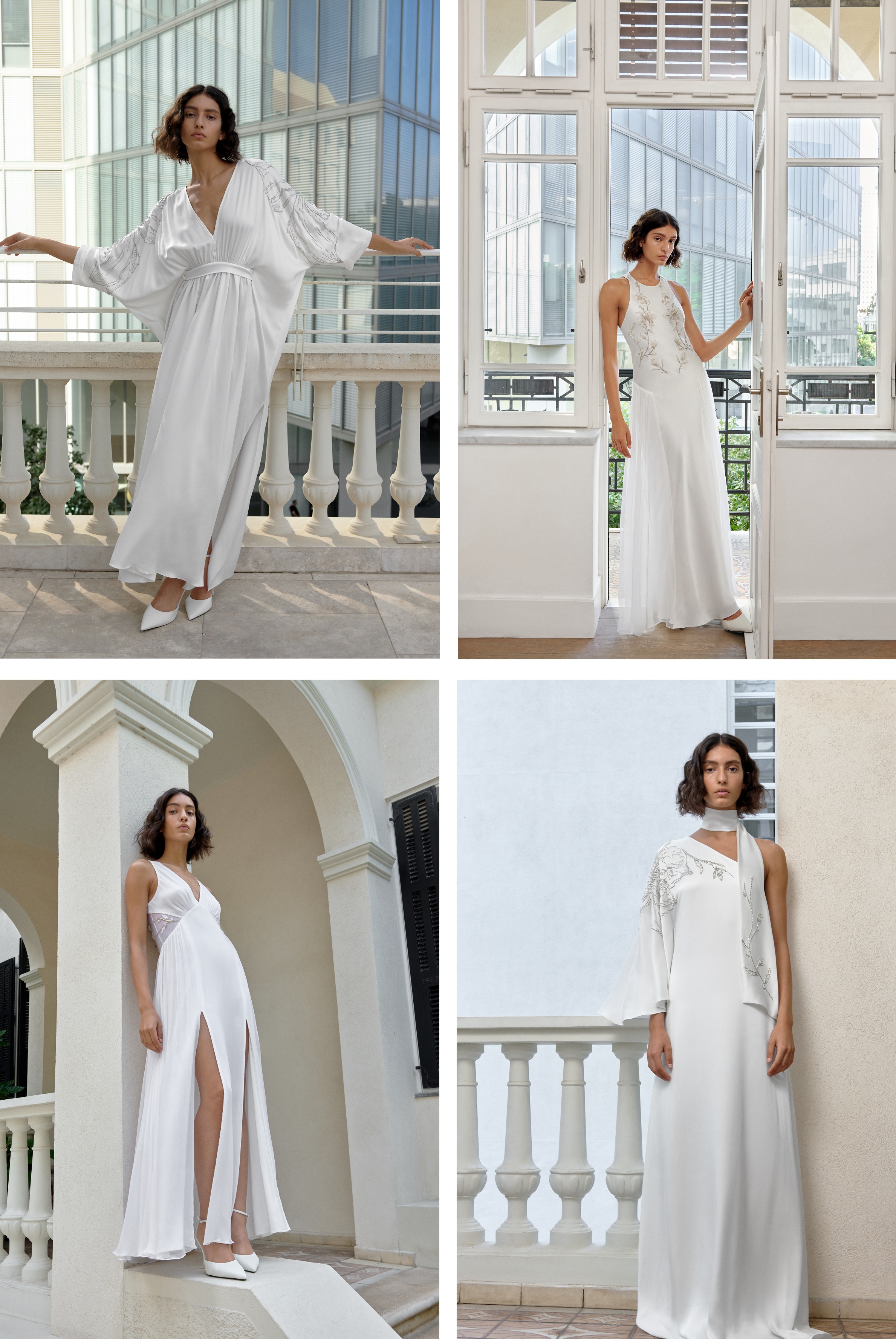
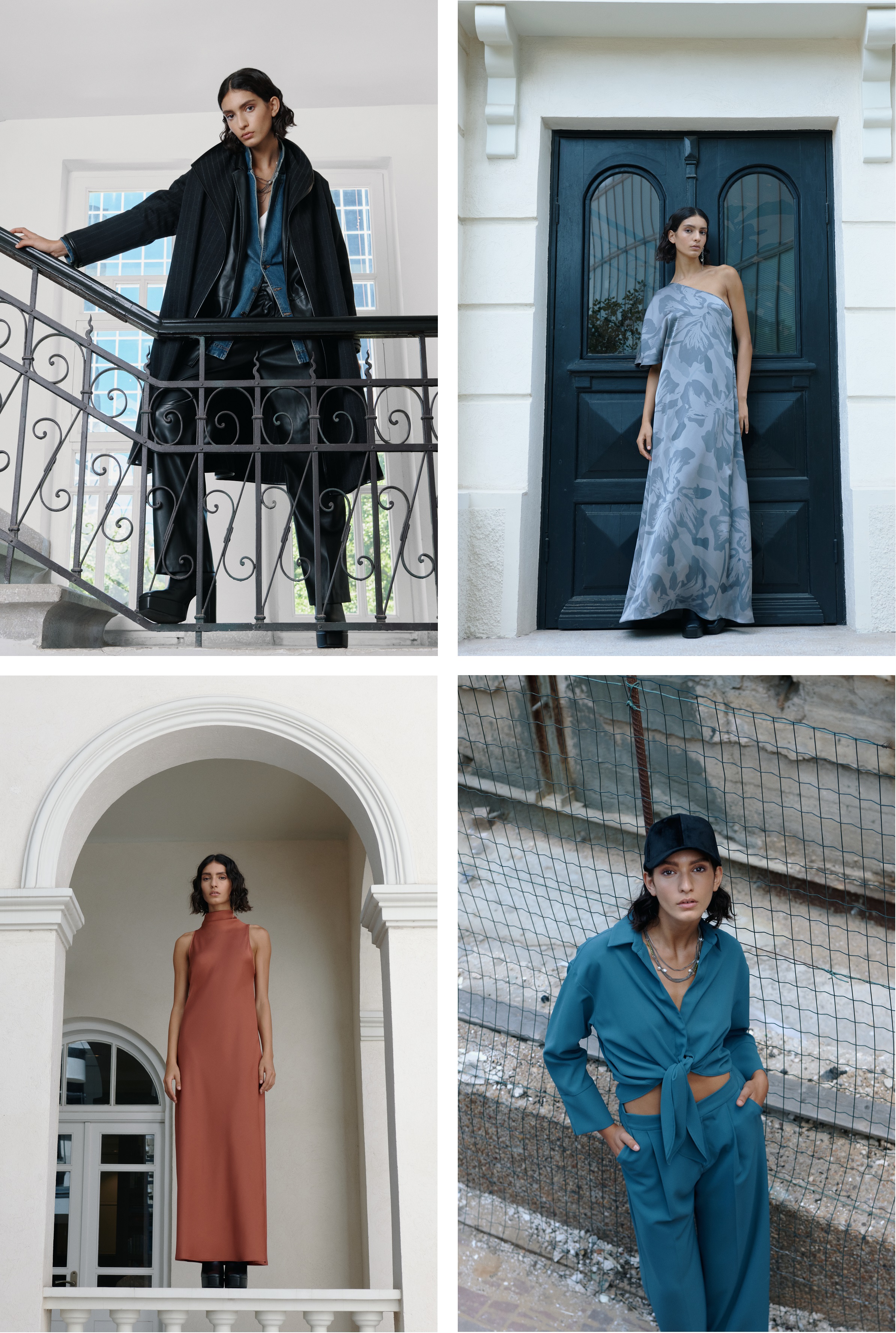
ST: Maskit has four lines. Maskit couture, made to order and ready to wear high fashion collection, M BY MASKIT is the second line which is a younger, much more accessible, priced lower and still produced in low quantities which make it unique. It is a line of a day to night which includes evening and everyday items, denim and knits. Bridal is a limited collection of bridal gowns. And Matana is home wear. It is a house of lifestyle which really matches the way women live today.
TB: To whom is the Maskit collection designed for? When you design, do you have a person or a muse in mind?
ST: Maskit is designed for a woman who is self confident; she is intelligent and she loves art and couture. She travels the world and she appreciates high quality, details and unique design.
________________________________________________________
“Day to night — don’t use the item once, mix
and match it and use it again.”
________________________________________________________
TB: Any international celebrities wearing Maskit today?
ST: The last one was Sarah Jessica Parker, who wears Maskit often, but the last time she wore our design was at the opening episode of “And Just Like That” as Carrie Bradshaw.
TB: Which countries are your biggest markets?
ST: Israel and The United States of America.
TB: Who is a female-role model who inspires you professionally?
ST: I would say Sarah Jessica Parker for being a super successful actress for years and being a very busy entrepreneur and a family woman as well. I love when women can combine everything together and be successful and strong.
TB: How do you balance good business decisions with your creative mission?
ST: With my husband Nir. He is the CEO of Maskit and he makes all the business and marketing decisions.
TB: Collaborations are important to you. Please tell us more about it. Who would you like to collaborate with in the future?
ST: We collaborate mainly with local businesses, businesses that are doing things that are very different from what we do, so we can learn from each other, reach new crowds, discover new ways. It is challenging my creativity and I love that. I would love to collaborate with a big sportswear company. That would be amazing!
TB: What was the best lesson you learned while working for late Alexander McQueen?
ST: Make as many ideas as you can for each design you do. That way you’ll always have a good option.
TB: What are you most passionate about, besides fashion?
ST: Yoga. I’m also a yoga instructor. I love sports in general. I surf waves and I run. I think it is the balance for me.
TB: Which statement best describes you?
ST: Stubborn.
TB: Have you ever been to the UAE? If yes, how was your experience?
ST: I was in the UAE in February 2022 for my 40th birthday. We could only stay for three nights because we couldn’t leave the kids for longer. It was absolutely amazing! The architecture, the food, the people, the beaches, the culture — everything was so perfect!
TB: What are your future plans for your business?
ST: To grow more and more and reach new markets. To have stores in the big cities.
All Images: Courtesy of Maskit
* This story by Tanja Beljanski first appeared in the December 2022 issue of L'Officiel Arabia.


.jpg)