Open for pleasure

Ferrari recently rolled out its blindingly rapid 296 GTB hybrid V6-powered supercar and in its wheeltracks comes the 296 GTS, which uses the same core ingredients as its sibling but adds alfresco (open-air) cruising capability to the mix.
Due on sale in the first half of 2023, the new addition broadens the appeal of the V6 rocketship as it adds drop-top versatility without any noticeable compromises vis-à-vis the GTB.
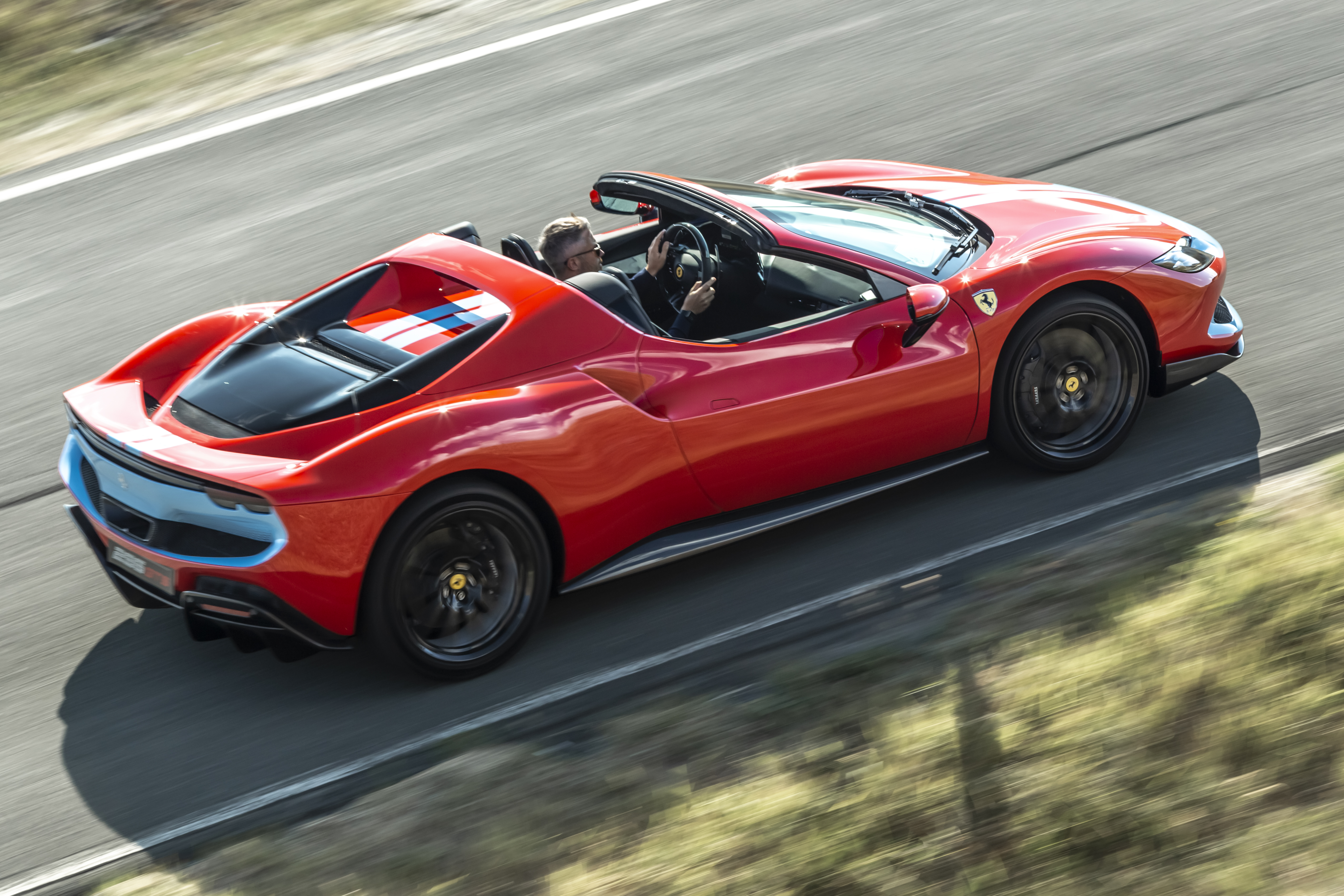
The transition to the open-topped format necessitated some extensive reengineering of the car, with the first step being to recoup some of the rigidity lost by lopping off the roof. The main focus here was to strengthen the lower side sills and A- and B-pillars, but Ferrari’s boffins say this added only about 5kg to the car, with the folding roof and its electrohydraulic mechanism adding another 65kg.
The folding roof can be made to deploy or disappear in 14sec at speeds of up to 45kph, and housing it and all its ancillaries required a comprehensive redesign of the upper rear half of the car.
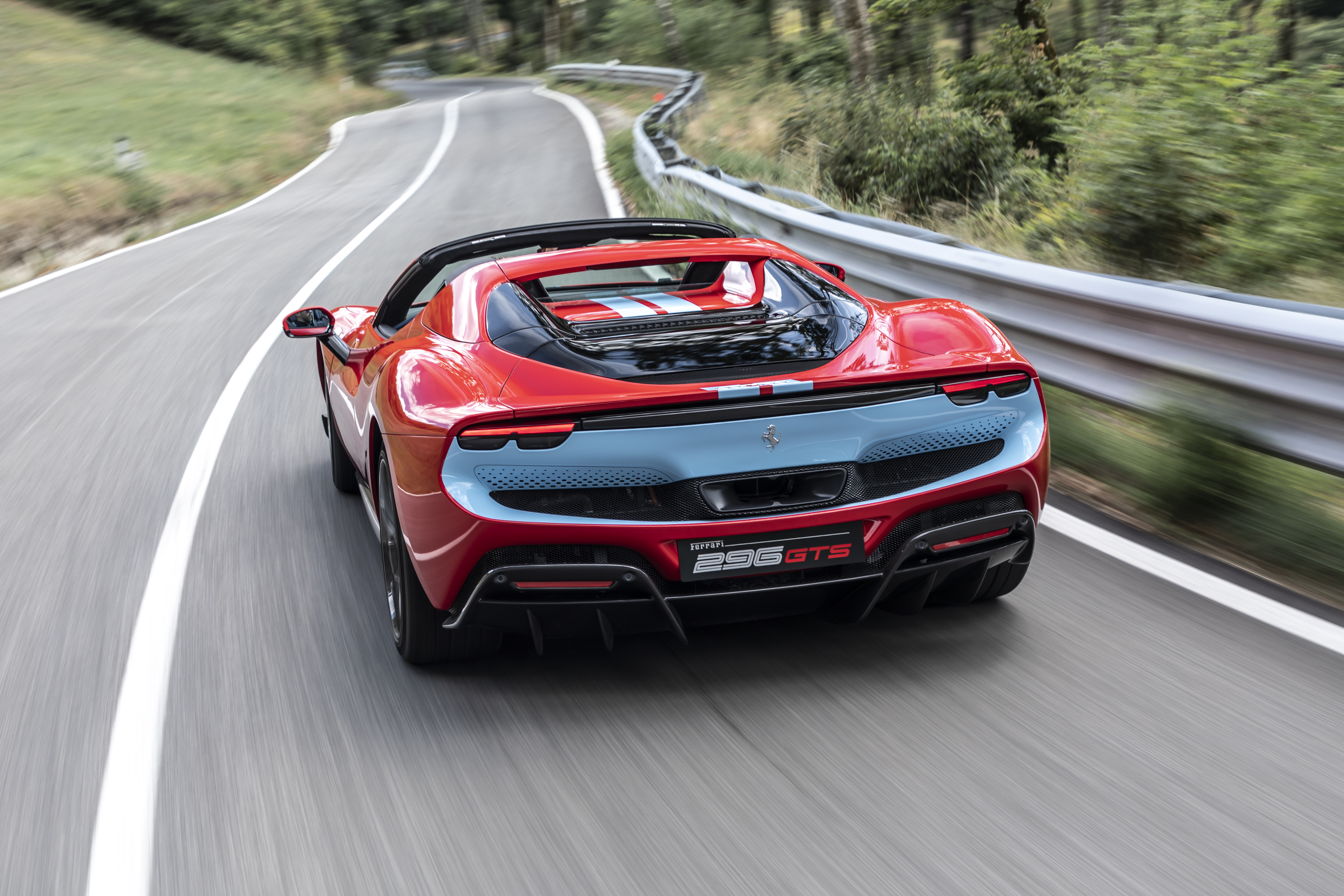
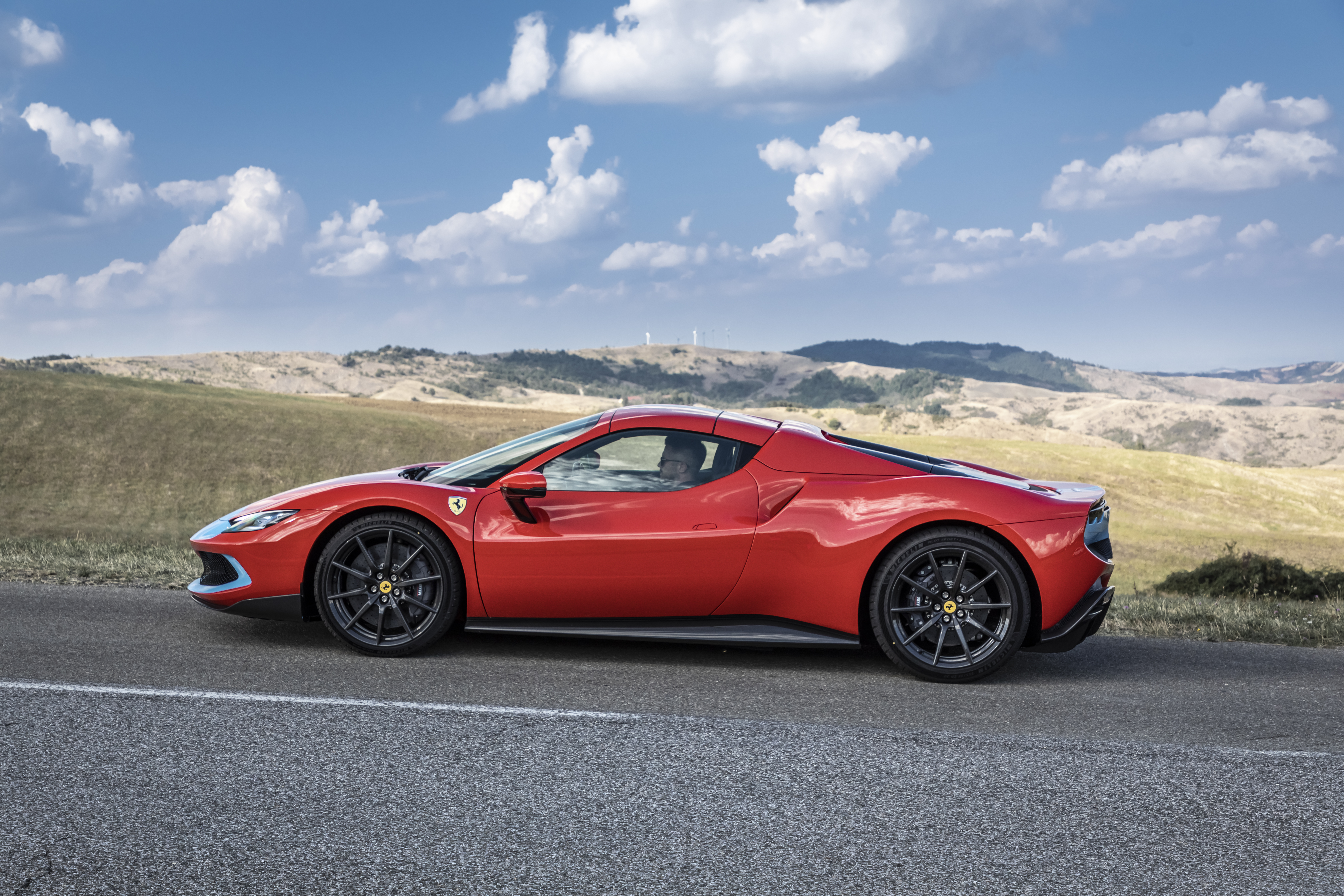
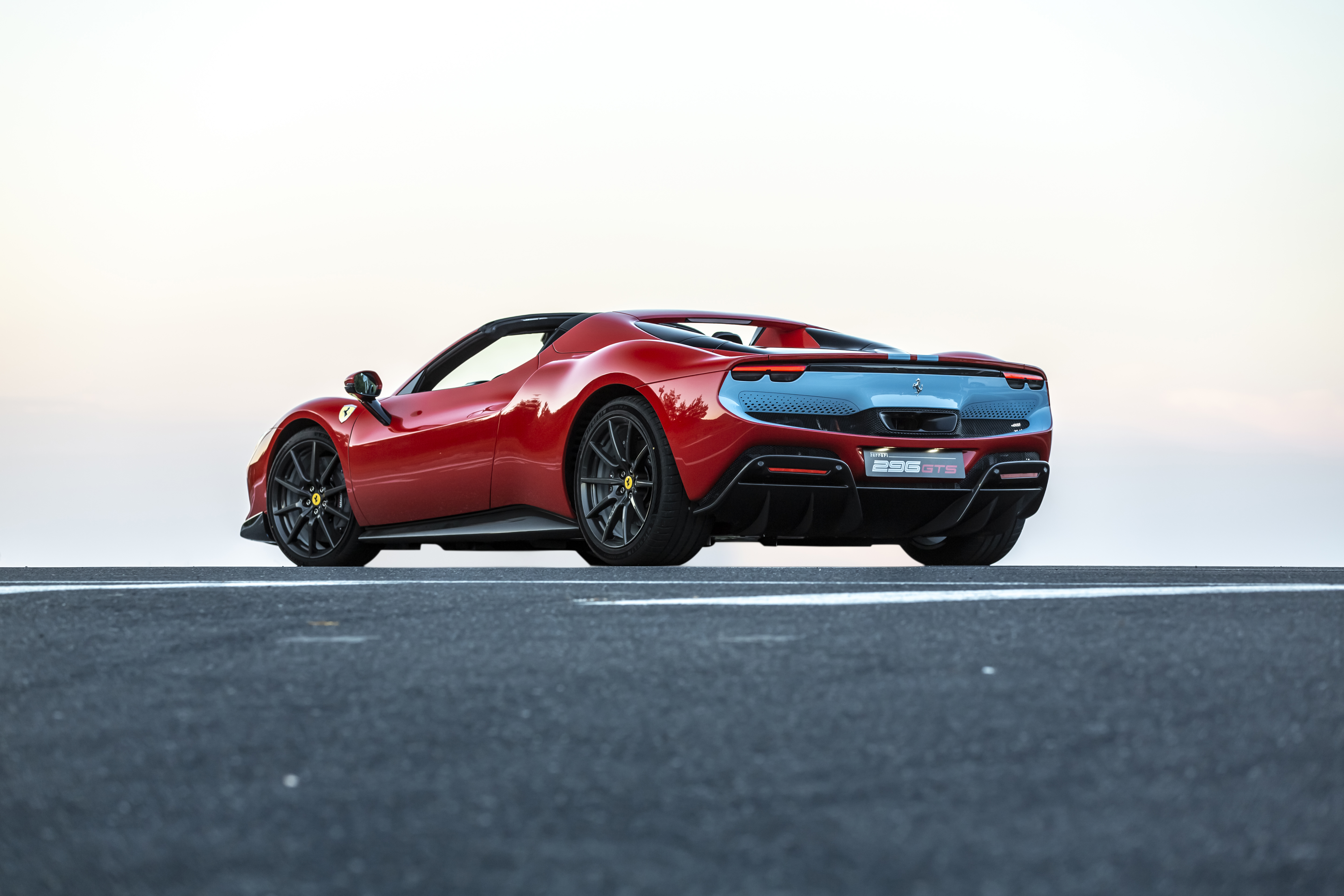
The GTS’s flying buttresses are connected by a transverse panel referred to as an ‘Air Bridge’, which, apart from being a nice visual element, also plays a role in managing the airflow over the rear of the car.
The GTS’s rump culminates in a shapely ‘Kamm Tail’ spoiler, and this is an active element that deploys at high speeds to contribute to 360kg of downforce at 250kph when the car is equipped with the optional Assetto Fiorano aero package.
As per the GTB, the GTS features a ‘tea-tray’ nestled under the front spoiler, and this element is a ground-effect device of sorts as it creates a low-pressure area under the car, which effectively sucks it to the road as speeds rise.
The 3.0-litre twin-turbo V6 is visible through a glass cover, and the GTS’s rear-biased proportions are accentuated by lovely haunches that evoke imagery of the iconic 250 LM.
The V6 and electric motor combine to kick out a stupefying 830hp at 8000rpm and 740Nm at 6250rpm. Given that the 296 GTS weighs a none-too-lardy 1540kg (dry weight), performance is nothing less than electrifying.
Ferrari quotes a 0-100kph split of 2.9sec, 0-200kph in 7.6sec and a top speed of 330kph, which places it among the elite in the hypercar segment.
Our first drive of the 296 GTS commenced in the scenic Italian seaside town of Forte dei Marmi, with the final destination being Ferrari’s spiritual home of Maranello. Before setting off in the low-slung roadster, a few moments are required simply to eyeball the car from various angles.
There are those who suggest recent Ferraris have lost the sensual beauty of their ancestors, but that’s not the case here. At least to my eye, the delicacy of the 296 GTS’s voluptuous contours border on perfection. I clearly wasn’t alone here because many thumbs-up were flashed by bystanders and oncoming motorists during my stint in the car.
The drive route, too, was a thing of splendour as it took in the Passo dela Futa (Futa Pass), which is lovely ribbon of tarmac that stretches across the mountains between Florence and Bologna.
An almost 2m-wide, 830hp supercar and narrow mountain roads populated by gung-ho Italian drivers and bikers mightn’t seem like an optimal combo, but it mattered little. The 296 GTS simply devoured this terrain, covering ground not only at incredible pace, but also with such supreme grace.
The hybrid V6 powertrain is a mighty unit that doles out enormous dollops of grunt with seamless efficiency. There’s just the slightest flat spot low in the rev range but, from then on, the acceleration comes in an avalanche – all very progressive and manageable though.
The soundtrack is dominated largely by turbo whoosh, so even though Ferrari execs like to refer to this powertrain as a “little V12”, to my ears it falls some way short of the orchestral wail of the 812 Superfast.
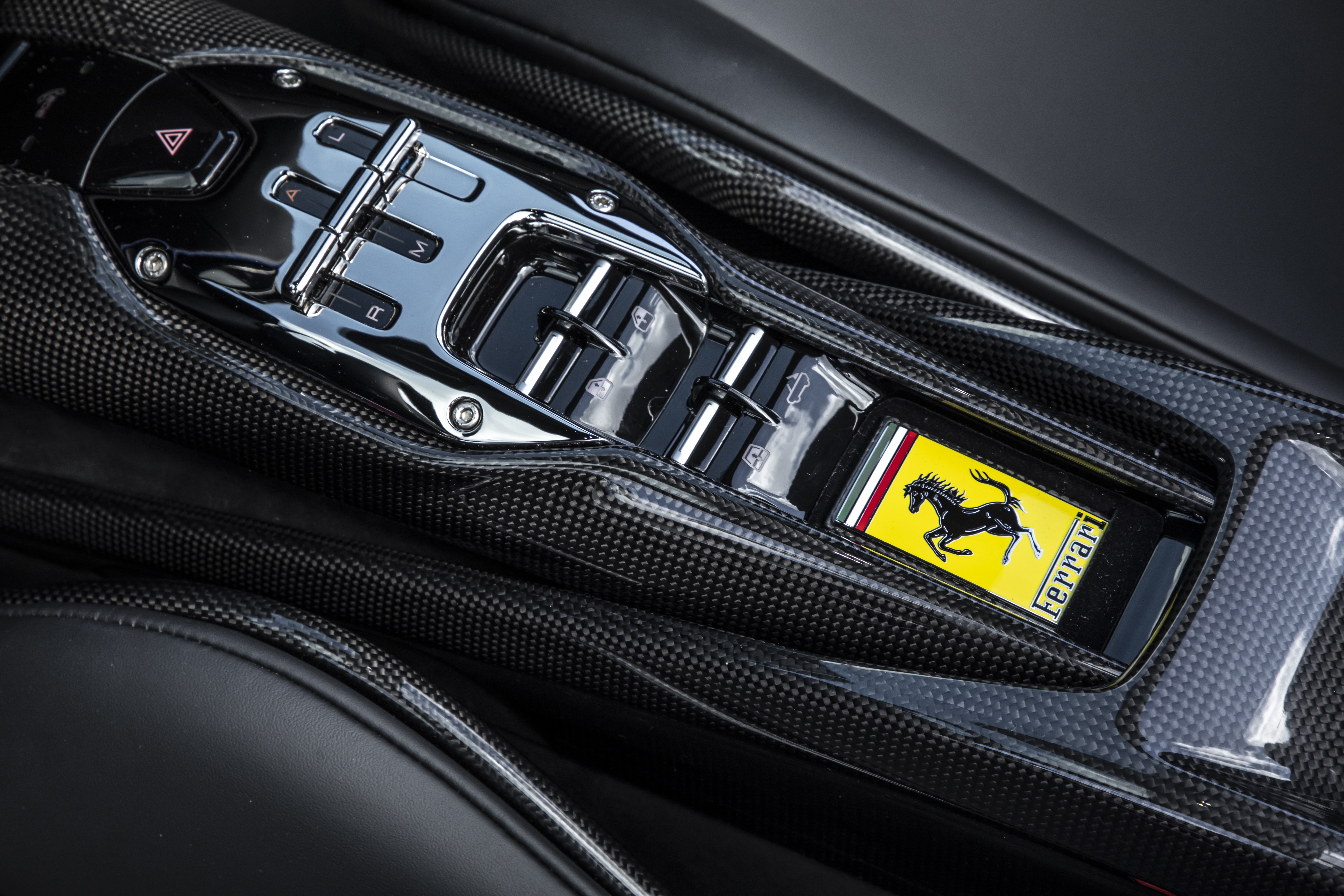
The eight-speed dual-clutch gearbox is superb. Whipcrack fast and responsive, each tug on the tactile carbonfibre paddles brings an instant reward.
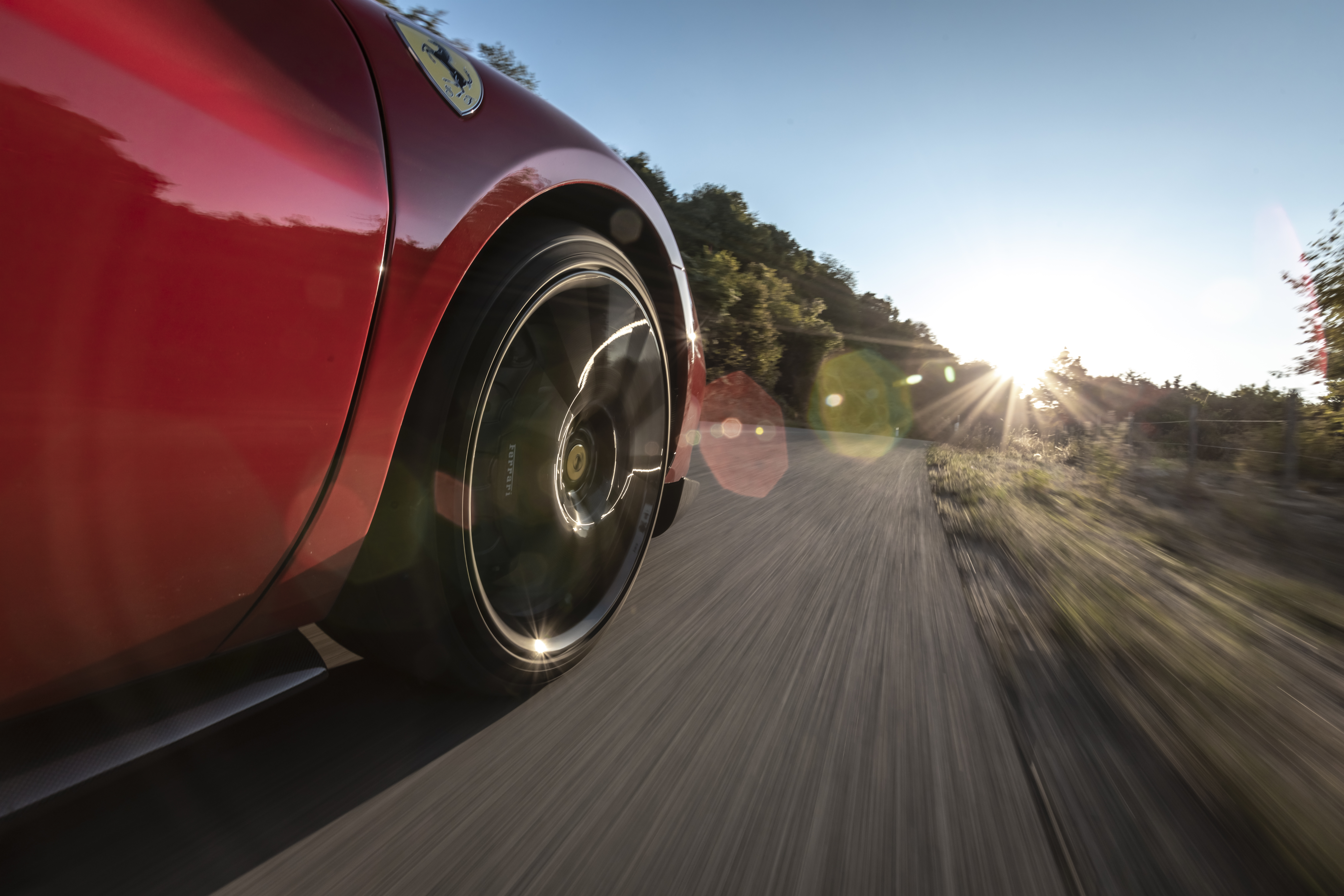
As per the SF90, the 296 GTB and GTS use a brake-by-wire system and, rather than instilling a sense of computerised remoteness, it’s quite the opposite. The brake pedal has excellent bite and progression, so there’s encouragement to exploit every last iota of retardation that the sizable (398mm front, 360mm rear) carbon-ceramic stoppers offer.
All in all, the 296 GTS imparts a sense of agility and light-footedness that I’ve experienced in less than a handful of cars. The closest thing that comes to mind is a Lotus Exige Sport 410 that I tested earlier this year.
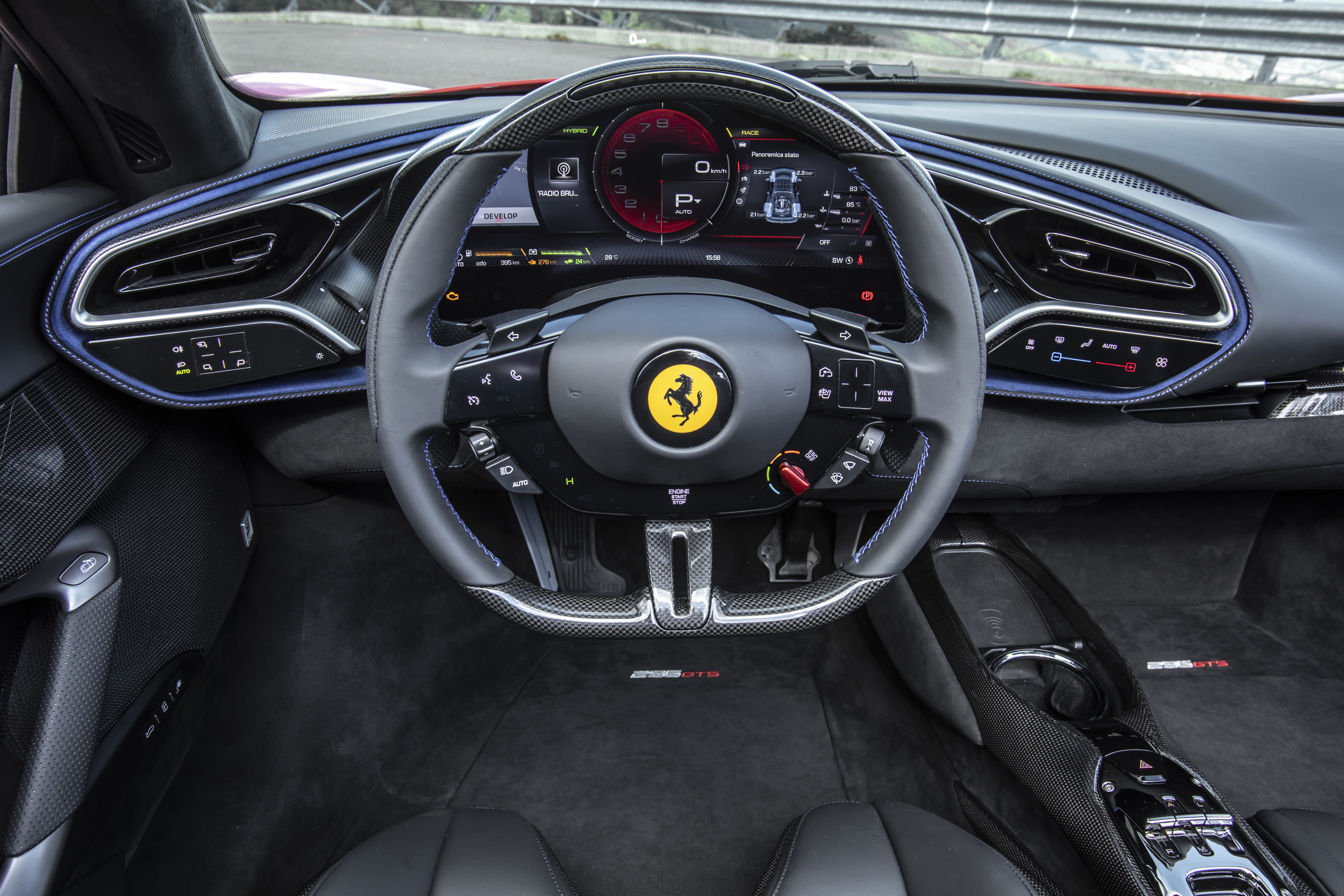
The cabin of 296 GTS is typical of contemporary Ferraris, with a driver-centric dash layout that integrates a trio of display panels within the curved instrument pod.
The tacho dominates the instrument cluster, with a digital speed readout and gear display nestled within the rev counter. The satnav screen is tucked away to the right of the tacho, but you can toggle through a menu that enables the navigational screen to occupy the entire display.
Peer out beyond the delectable carbonfibre/leather flat-bottomed steering wheel and your view of the road is framed by the prominent wheelarch bulges. This is a welcome contrast from some supercars (where you have zero view of the car forward of the windscreen), and it helps in accurately placing the Ferrari on narrow roads.
Gripes? I felt the seats could have done with a bit more side bolstering, and I couldn’t find a comfortable place to rest my left foot as the inward curve of the sidesill hemmed it in.
The Ferrari 296 GTS’s standard kit list is largely as per the GTB. Among its quota of goodies is cruise control with steering wheel controls, four-way power-adjustable leather seats, trip computer, six-speaker stereo, satellite navigation, Apple CarPlay/Android Auto, climate-control air-conditioning and 20-inch alloys.
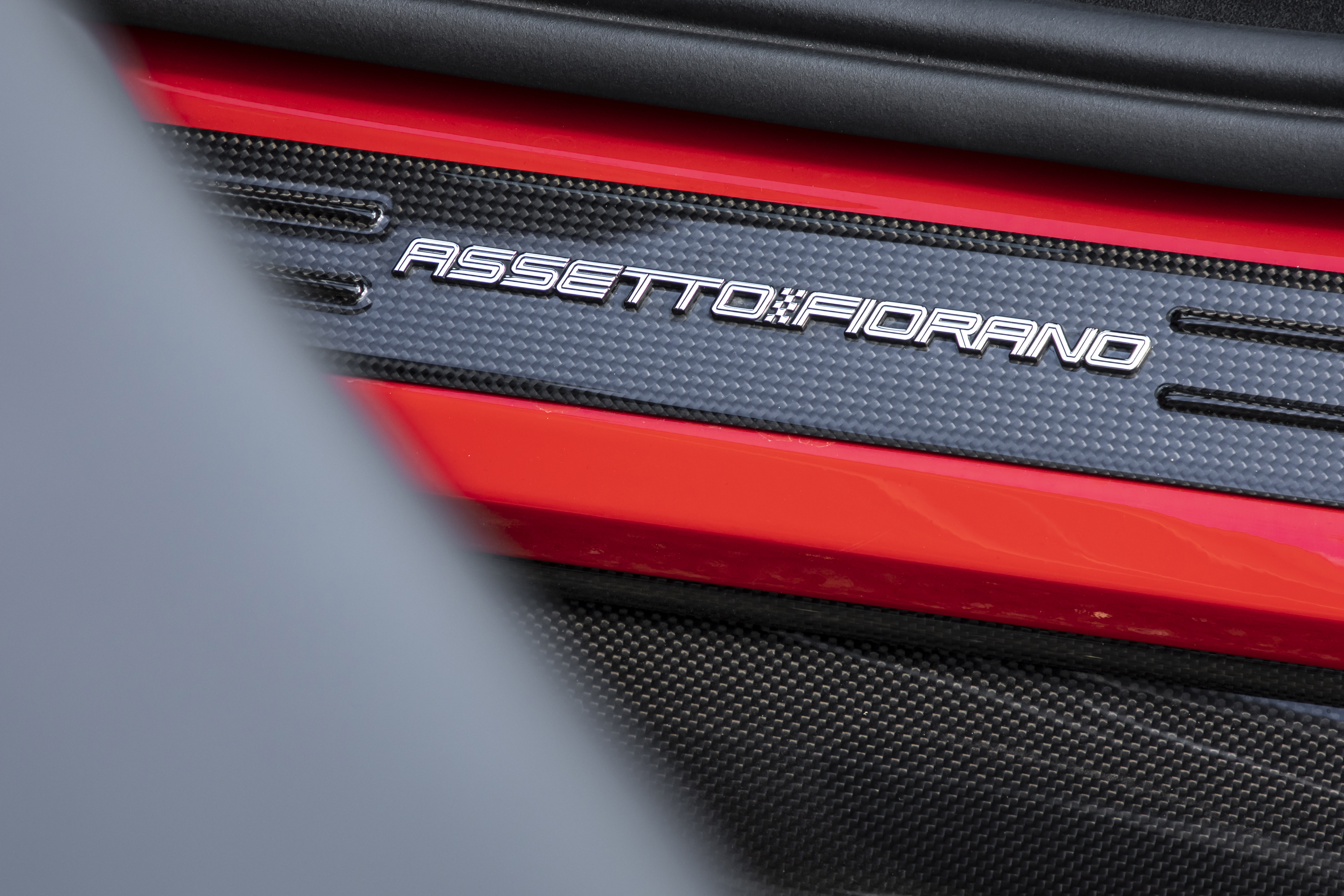
Buyers wanting to go a bit further can opt for the Assetto Fiorano package, which brings a weight saving of 8kg, while adding to the car’s downforce. The key component of this package is GT-racing-derived adjustable Multimatic dampers that are optimised for track use.
The Assetto Corsa option also includes a bespoke carbonfibre aero kit at the front that adds 10kg of downforce, and there’s more weight-saving carbonfibre used elsewhere on the interior and exterior. In addition, you can opt for special bi-colour livery inspired by the Ferrari 250 Le Mans if cruising anonymously in not your thing.
So, should you buy the Ferrari 296 GTS? The real question you need to ask is: can you afford it? If so, you can look forward to one of the most sublime experiences imaginable in anything with four wheels. Yes, it’s that good.
2023 Ferrari 296 GTS at a glance
Engine: Plug-in hybrid 3.0-litre twin-turbo V6
Power: 830hp at 8000rpm
Torque: 740Nm at 6250rpm
Transmission: Eight-speed dual-clutch auto
0-100kph: 2.9sec
0-200kph: 7.6sec
Top speed: 330kph+
Weight: 1540kg (dry weight)